Refusal Breaker Pattern: Harness the Power of Silence
Letting the AI refuse to answer and guide users to clearer questions.

The problem
Have you ever asked your AI a question only to receive a baffling or misleading answer? It’s frustrating when you’re trying to get the information you need, and the AI just isn’t grasping the essence of your question. Misunderstandings and miscommunications like these often arise from poorly formulated questions, leaving both the user and the AI at a loss.
The refusal breaker pattern
Imagine you’re asking your AI friend a question, but it’s not very clear. The ‘Refusal Breaker Pattern’ is like a kind teacher who tells your AI friend, “Hold on, let’s help them rephrase that question so it makes more sense.” With this guidance, you can ask a better question, and your AI friend can provide a more accurate answer. In short, the ‘Refusal Breaker Pattern’ allows AI to do not answer and help people ask their questions in a clearer way, so the AI can provide helpful and relevant information.
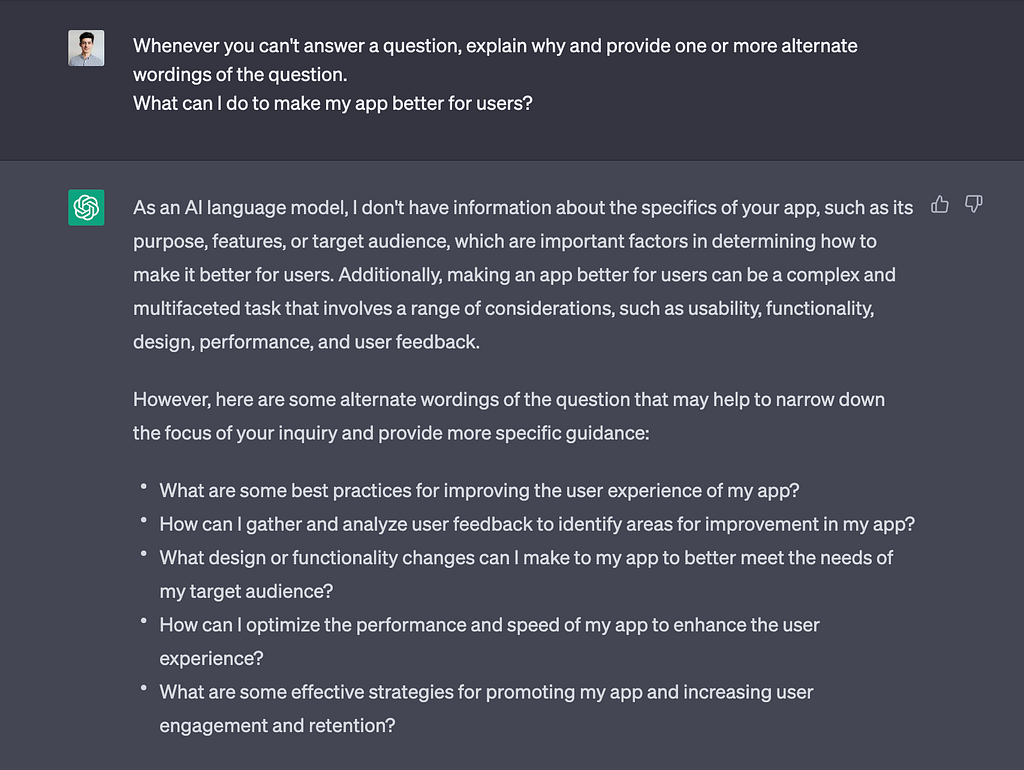
With refusal breaker pattern
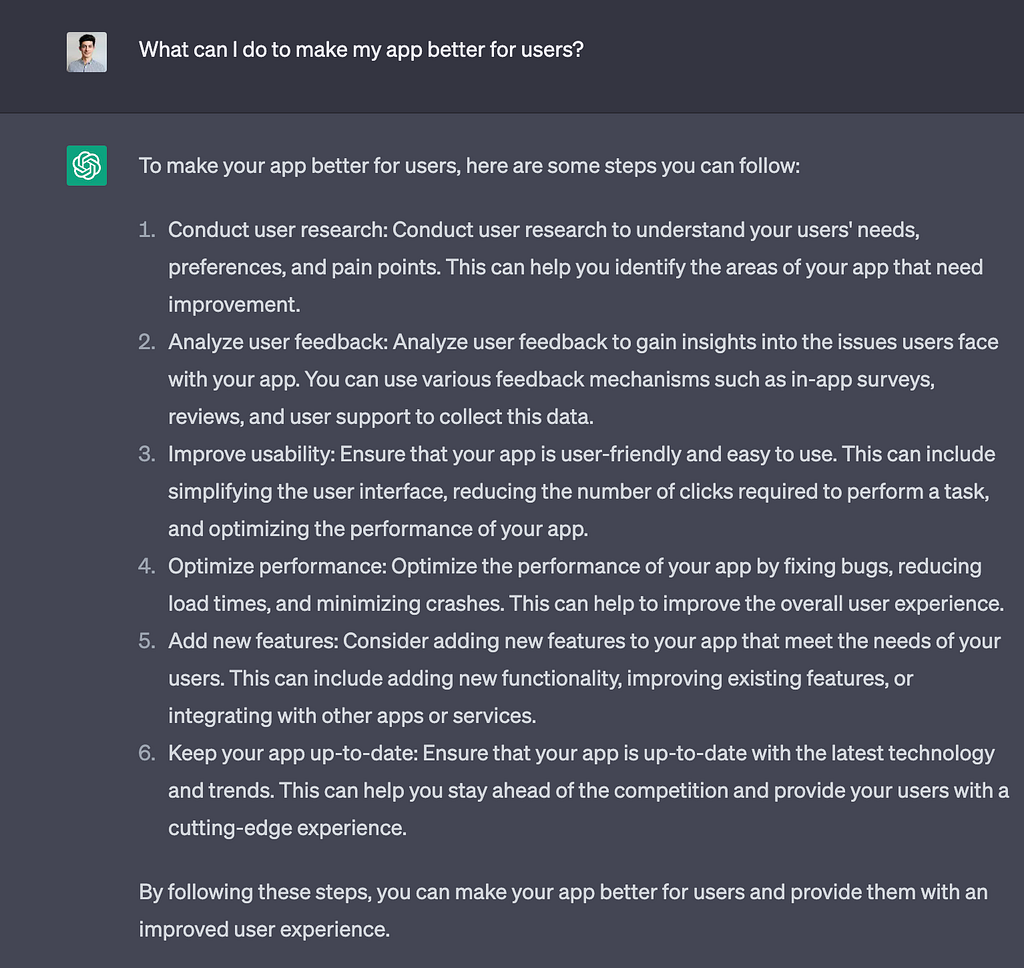
Without refusal breaker pattern
As we can see, AI invites us to give more context and steer the question in a specific direction, which in the long run leads to a better outcome for my initial request.
Embracing the Power of Refusal in AI
AI models often try to answer every question, even when the question is poorly formulated or beyond their expertise, leading to confusion or misinformation. The ‘Refusal Breaker Pattern’ encourages AI to provide guidance when a question is unclear, helping users rephrase their queries to receive accurate and relevant responses. In the end, with the ‘Refusal Breaker Pattern,’ sometimes less is more, and silence can become a powerful tool for understanding.